
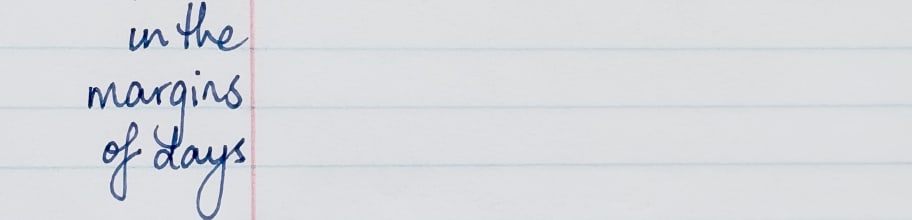
oxygen
on leaving Brooklyn and learning how to breathe again
Suddenly, it’s 20 degrees outside. After months of the cold biting into any exposed patch of skin the air is jelly-soft, and warm.
I strip off my shoes and press my feet into the yellow grass. The sun has been ever-present since we arrived in New York just before Christmas, but now it’s finally warm enough to sit on my skin, sink into it.
Moonchild plops down on a little blanket I’ve made from a canvas bag with his bowl of blackberries and what we call ‘moon cheese’.
It’s a picnic!, he declares, satisfied.
Brooklyn was our plan, at least for a year or so. But I realise — almost immediately — that I can’t stay. I feel like I’m drowning in the long canyons of rosy brownstones. I stop sleeping because my brain catches on each siren, each helicopter, and I become convinced I can hear the subway moving beneath me. Each day I squint into a sun so low and bright I feel almost burned through.
We pull Moonchild out of the preschool he’d been scheduled to start, stuff our awkward collection of bags and boxes into an Uber, and drive north to the towns that line the edge of the Hudson River.
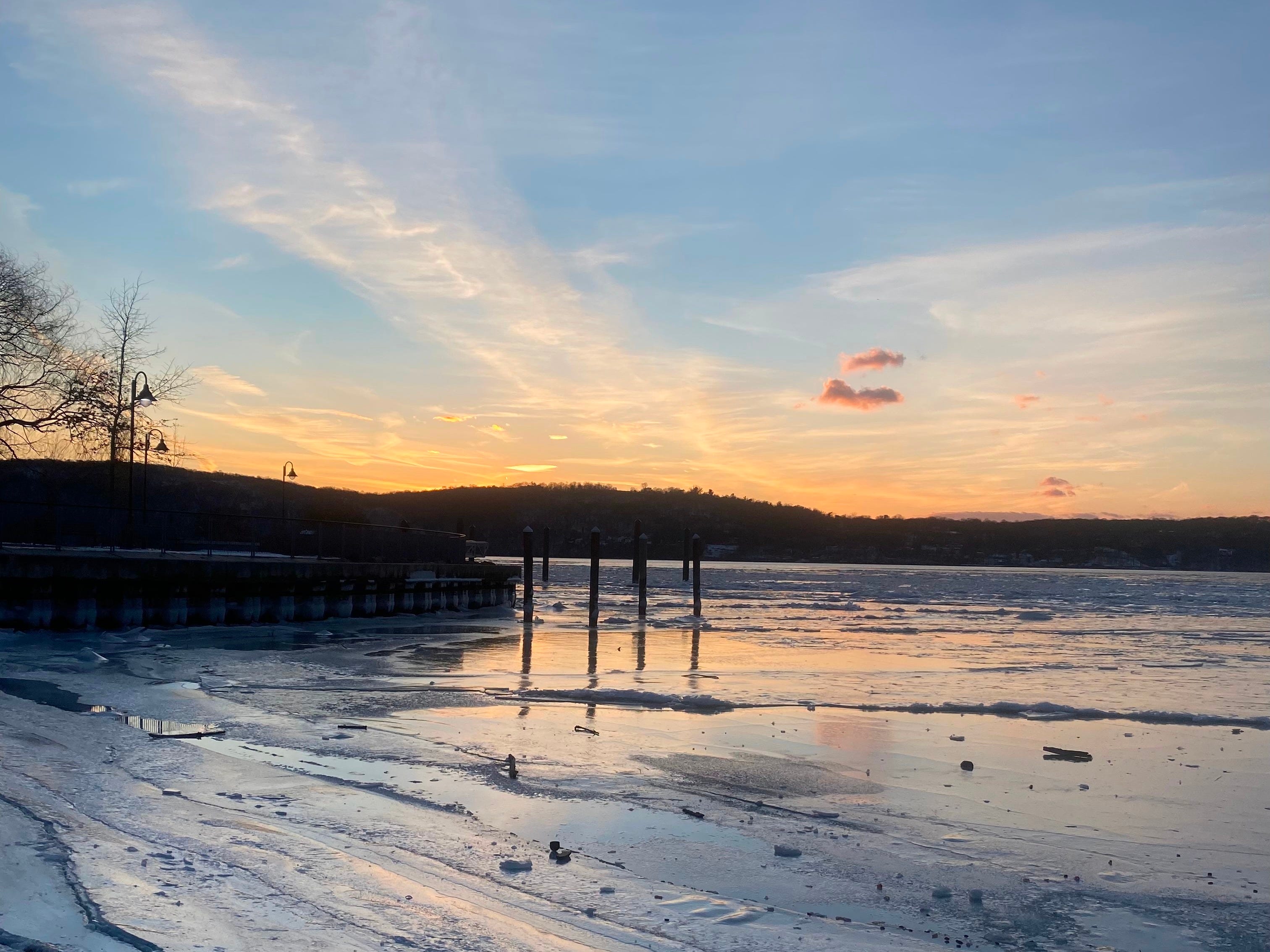
The wind is diamond sharp on our faces. The sun, like a pearl in a shell, gleams down. The Hudson is thick with ice, which breaks off in chunks and flows towards the ghost outline of Manhattan on the horizon. Moonchild pries a stick out of the dirty playground snow and heads off towards some bushes.
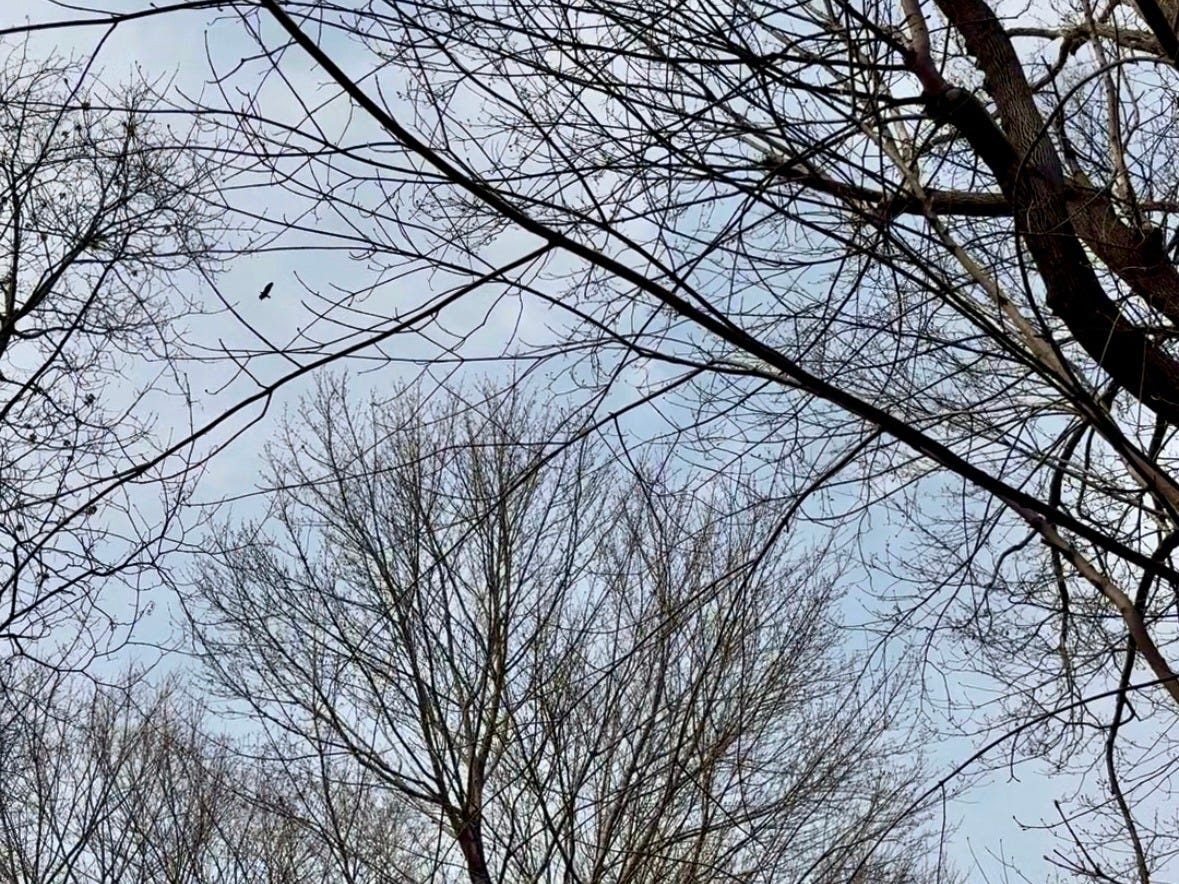
Above us, two hawks draw circles in the air.
We keep applying to short-term rentals, but they keep falling through. Airbnbs that show long-term openings tell us they’re listed incorrectly, sorry. We Airbnb hop, dragging bags and boxes around.
I open my Met Weather app and look at the forecasts for where my loved ones live, or places I’ve lived. Dulwich Village, Bellingen, Lisbon, Sydney, Ubud, Comares. I experience the weather as an act of love across distance. I find myself longing for the thing I used complain about the most: London’s grey-green, watery, winter days.
I read Wikipedia entries on my phone late at night about the Hudson, about the river towns, about the valleys and the water and how they’ve formed this landscape over millennia in deluge and retreat.
One of the local tribes, the Haudenosaunee, called the river Muh-he-kun-ne-tuk, which means “river that flows two ways" or "waters that are never still”.
I pull on my new calf-length puffer coat. It has a yolk-yellow inside and green puffy shell. I twist my hair up and smash a claw clip against my skull.
The underneath of my hair is matted, from rubbing against the coat’s hood. I try to break it apart with my fingers. It feels soft, a nest. I feel animal. It reminds me of the early weeks and months of motherhood when the hair on my legs grew out long and soft. I used to stroke it and feel pleasingly feral, amongst the sweat and blood and milk.
Here I feel as rough and naked and transparent as the landscape, like the stripped branches of the trees, or the bare thick mud and wasted grass. The light and the wind go through everything. My mind feels crowded and empty at once.
It takes time to articulate it, but I realise I am caught deep in grief. I ache for my little corner of South East London. I first moved there in my twenties (and moved away, and moved back, and on), and over time the little pocket around Peckham, Dulwich, and Gipsy Hill became my place, a place that I could walk in my mind as I fell asleep, all the roads and rail lines, the sprawling parks and hidden rivers, the old chip shops and defunct cricket bat factories and rooftop bars and butchers with whole goat carcasses, and the ancient willow trees.
I argue with B constantly in a nasty, bitter way. I’ve moved a lot in my adult life, but this is the first time I’ve ever moved without a sense of enchantment. The sense of loss is so huge there are days I feel I cannot carry it.
We struggle to find a new childcare space, and even when we do it’s no match for the little, leafy Montessori school we’ve left behind. Another school, a forest school, promises me a place and then the team just stop replying to my emails. A few weeks later I receive a curt response saying actually they’re full up. It’s nothing to them, but to me it feels brutal.
We take Moonchild to the city to have his tonsils and adenoids removed, and grommets (or ‘hearing tubes’ as they’re called here), inserted. These are not uncommon procedures but I feel sick at the thought of doing this to him, before he can consent himself. I hate that another human will alter the body I grew within me, as if I somehow grew him wrong.
A year ago I entered a distinct break in my mothering journey. At a routine check-up, in a room packed with mismatched 80s cabinets and a papered exam bed, I was told Moonchild was slipping against key developmental markers. Slipping, sliding, unfastened. The Health Visitor said, Uh, well, I can see you’re upset. My whole world was on fire.
The language remained clinical and ambiguous, but the meaning behind that language seemed clear: Moonchild was out of line in a world measuring for ‘normal’. I am not yet sure how I can or should write about his body, his world. Of course, our worlds are intimately intertwined, they are within each other: we overlap on a cellular, dyadic level.
I entered long months of private, cry-all-day terror — in part caused by the fact that we had no clarity, and having to live in this uncertainty drove me crazy. We were placed on NHS waitlists, and it was whispered that while early intervention was key, these waitlists were very long, and really we should pay for private if there was any way we could make that work. My world diverged from a world I thought I was part of, with the blue-sky trajectory of a child who does not require multiple assessments and appointments, multiple lines of investigation.
I began to avoid my little group of fellow parents who I’d worked hard to create as we navigated early parenthood together. Wandering the little wild pockets of South East London felt like the only thing I could do to find sanctuary. All the plans I had for the year dropped away. Instead, I began researching obsessively, taking Moonchild to private appointments as we could afford them, building a map of information.
One thing that became clear was oxygen: he was not taking in enough when awake, and when asleep he was oxygen starved, struggling to breathe and stay asleep. There were nights where I would hold him against me as he fought to take a breath.
The surgery opens his airways. As I sit in the hospital waiting area, I repeat to myself: I am giving him breath, I am giving him air.
When we go into the operating room he isn’t scared. He lies down on the table with no fear, smiles and me, and says: I have a nap!
Yes that’s right my love, I murmur, and smile at him.
But when they put the oxygen mask over his face he immediately thrashes, and begins to shout and cry. I pin his body tightly against mine until he finally slips into unconsciousness.
Whenever I look up, I begin to see the hawks. Above the river, above the tree line, the roads, the houses. I try to identify them but they’re high up, and I don’t know enough to be able to tell if they’re a red-shouldered hawk, a red-tailed hawk, or one of the other types that Google tells me are common here in New York state.
I read that when you watch them circle they aren’t flying, but riding a thermal, a twist of hot air that allows them to spin, held aloft by heat and their web of skin, bones and feathers. It’s a sort of rest state.
A river that flows both ways, I think. A way to rest against the air.
Mummy, Moonchild says, You’re my best friend.
I have been talking about friendship. I talk about the friends we’ve left behind in London, the ones we’ll try to make here. He insists the only friends he wants are me, and his Daddy.
I stand by the trunk of an enormous fir. Someone’s cut off the lower branches and it spews sap the same shape and pale-mauve colour as a brain. When we’re outside, he looks intensely for sticks, moving slowly over the grass, through bushes, under trees. I suck in oxygen. I stare over the roofs of houses and catch the flow of the river in the gaps. I try to coax my mind into other thoughts, beyond the thoughts that bounce from planning our next move, our next health appointment, what’s for dinner, all the mundane, the insistent things. I try to think: what have I read, listened to, what about the dystopian fuckery happening here, in this country? What can I do? Who am I? What am I? Now, here, in this place.
Moonchild finds the perfect stick and the stick becomes a sword for a knight, the spine of a rocket ship. We look for fairy houses in the trees trunks, and I tell him a distant church spire is castle and we scan the clouds for dragons.
There! he shouts. I see one!
I am conscious of knitting his reality into a version of the childhood I’d hoped to make for him in England, and the type of motherhood I want to be a part of. Sometimes I feel ridiculous, but it also makes me feel better, closer to something mystical and glimmering.
Instagram serves me a quote from Alice Notley’s Paris Review interview (Issue 247): “Writing is not therapy. That’s the last thing. I still have my grief.”
I dig out a copy of her Selected Poems from a box of books. In Incidentals in the Day World she writes:
child was is me, and me, and no one
spangled with charm apparently flesh
you in me with me mean mind clear and fleshed
I lie next to Moonchild as he slips towards sleep. I’m used to knowing he’s asleep because he begins snoring, loudly. Only, not anymore. He enters sleep silently, or with the barest whisper of breath. I imagine the oxygen entering him, filling him up, in a way it hasn’t done for so long. I imagine him glowing with it.
I think of the tiny baby I would hold in my arms, against my chest, deep in the seemingly-endless winter nights completely unsure of how to coax him off my breast and into the cot. The burn of tiredness in my face. I could step back into that moment in the blink of an eye.
The year is turning, flowing into the warmth. I look for the shoots, for buds on the branches. Small hyper-green tongues emerge, and then the bright, blousy daffodils.
Our bodies, mostly water, move both ways, I think, towards the things we need to hold onto to form a meaningful version of ourselves, and away again, towards the things that will shape us anew.
I have to learn to hold the grief of leaving with the flow of coming to know somewhere new, coming into an intimacy with this place, and my body in this place.
Both Moonchild and I are learning how to breathe again.
Dear reader, thanks for being here and reading these words. If you’d like to subscribe, or buy me a coffee, I’d be grateful. See you soon for more words.
Petra this is beautiful and eloquent. The grief of losing a home is so relatable for me. As is the love and protection for moonchild. I think you’ll both learn to breath again - and hopefully soon.
Big hugs
This is stunning. Thank you for sharing it. xx